Summer Stories 2026:
Art, Ancestors, and Connection
This summer, we spent a week making art, sharing stories, and getting to know each other at the White Center HUB. From July 20–24, FEEST’s fifth year of Summer Stories brought 25 young people together to explore the theme of Ancestors and Descendants through creativity.
Created and facilitated by FEEST’s very own Communications & Development Manager, Dev, Summer Stories has spent the past five years making space for young people to explore their identities, tell their stories, and build connections through art. Knowing our own stories and listening to each other helps us build the trust and shared purpose that community organizing depends on.
Guided by five teaching artists, we explored who came before us, how their choices shape our lives, and what we want to make possible for future generations. Our theme, Ancestors and Descendants, invited us to consider what we have inherited and what we can do together to leave a more just world for those who come after us. Each day brought a new artistic practice and another opportunity to connect and create.
Monday: Creative Writing and Seven Generations with Nurhaliza
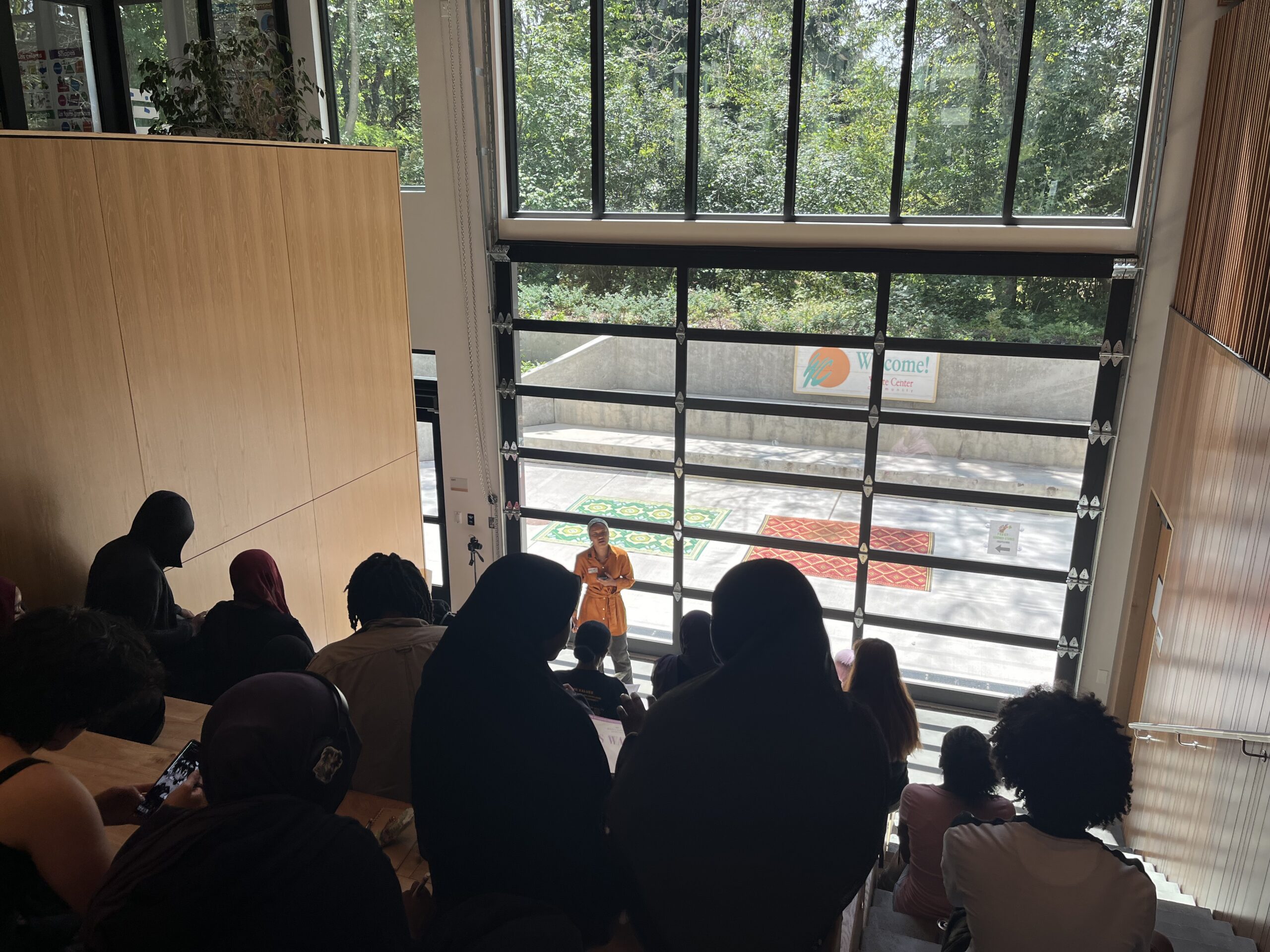
This image is of teaching artist Nurhaliza and Summer Stories students listening to her guiding questions in the White Center HUB Amphitheater
We opened the week with Nurhaliza, using creative writing and the Seven Generations workshop to reflect on our relationships with the past and future. Writing gave students space to think about their ancestors, their own experiences, and the stories they carry. Nurhaliza offered us an opportunity to rage journal about the things we were angry about. Students ripped those thoughts up and threw them away, a physical symbol of letting go. She also shared with us a question to think about: “What if our friendship is being witnessed and experienced by our ancestors? What if our solidarity with one another is one that exists on a continuum?”
These reflections introduced a question we returned to throughout the week: How do the people who came before us influence who we are becoming?
One student shared:
I got to think deeper about my ancestors and those who came before me and how they affected my current life.
Starting with these questions gave our art-making a shared purpose while leaving room for each person’s own interpretation.
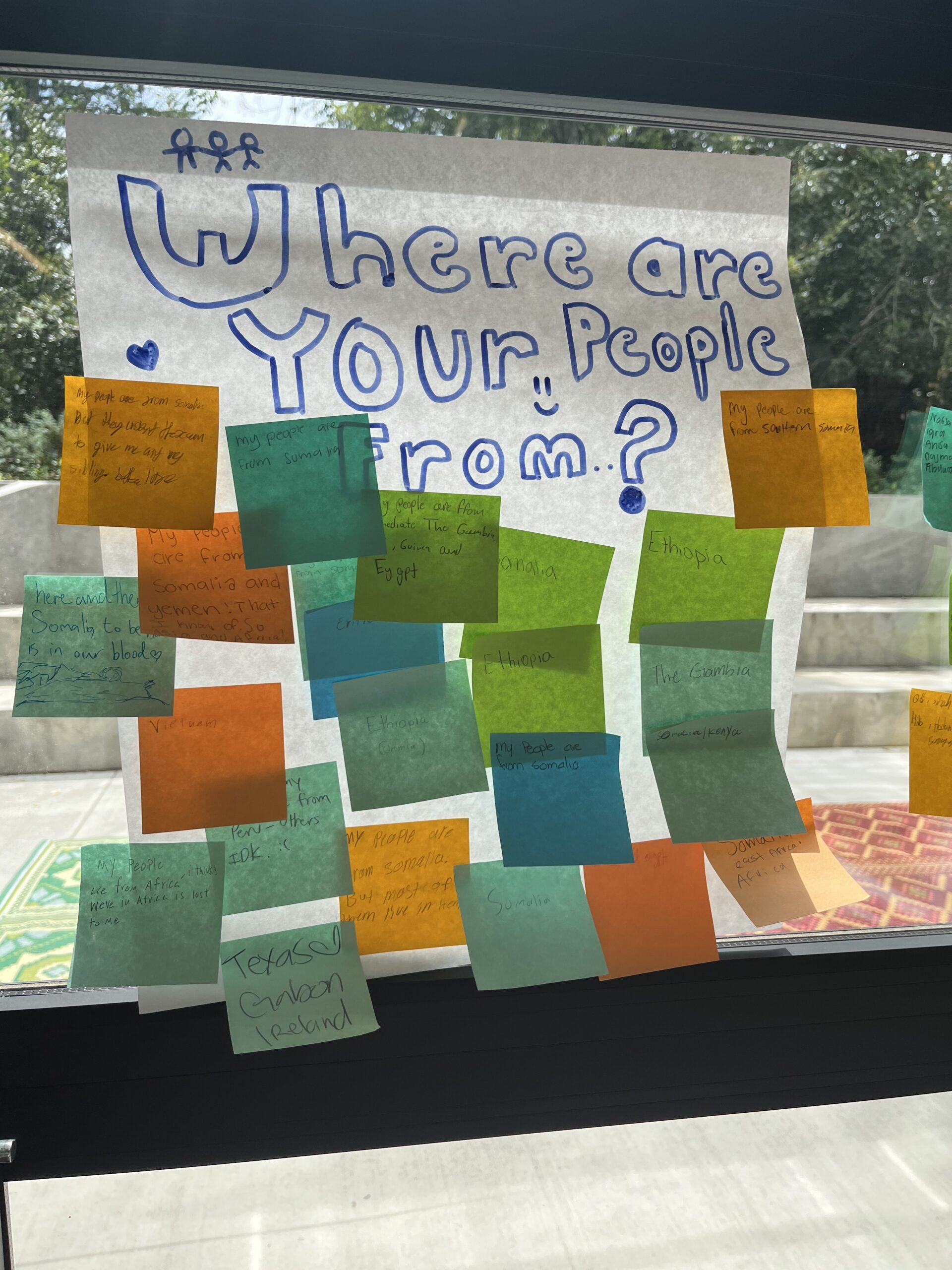
This image is of Nurhaliza’s 7 Generations Activity, which invited Students to reflect on themselves and their ancestors.
Tuesday: Photography and Perspectives with Annette
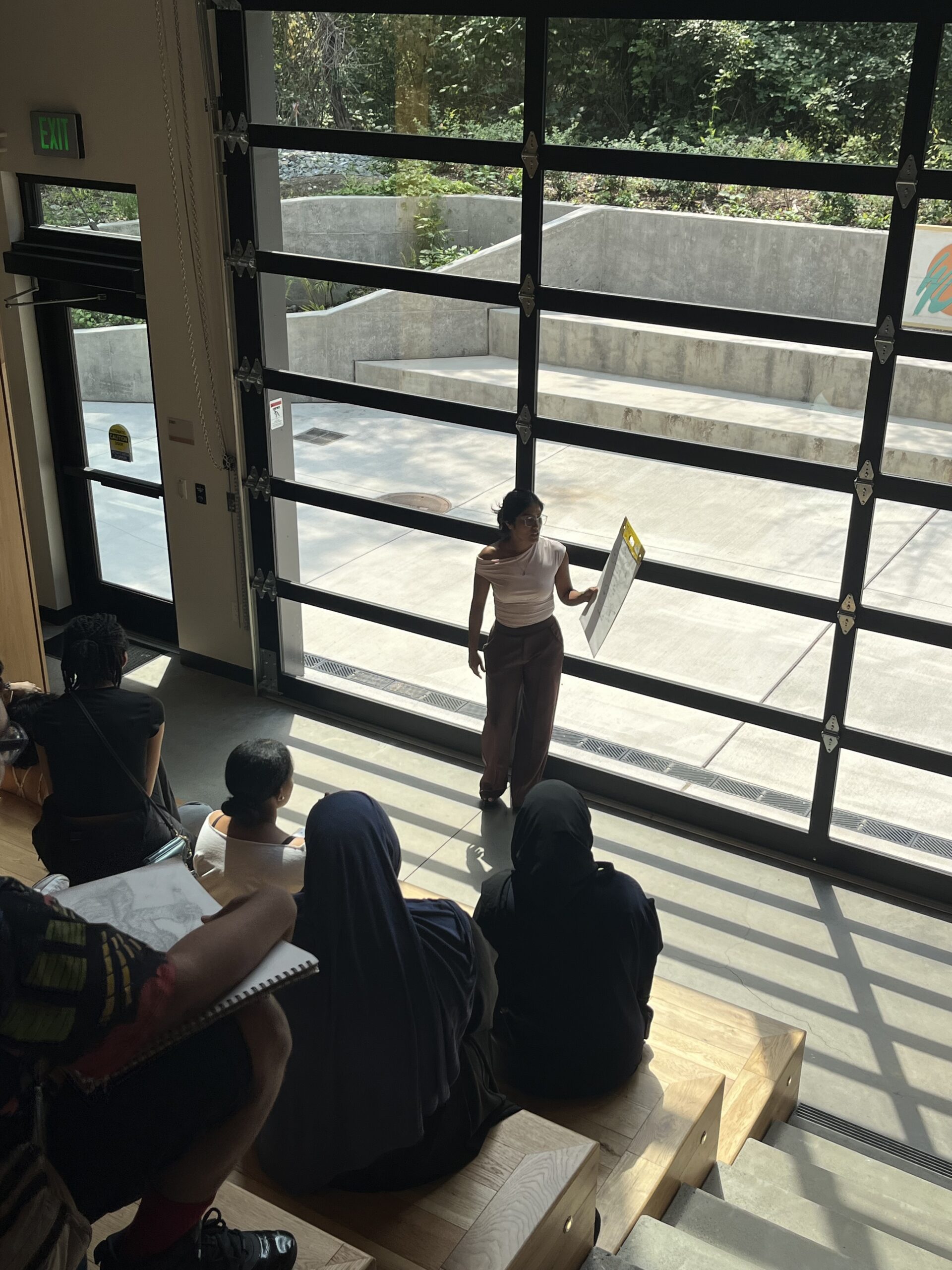
This image is of teaching artist Annette chatting with students about the perspective activity.
With Annette, students explored how our experiences shape the way we see the world. We made paper frames by cutting a shape into the center of a small piece of paper, then drawing about our perspective on one side and writing about what it meant to us on the other. The activity invited us to consider what we bring to a photograph: our memories, the places we come from, and our hopes for the future.
Throughout the week, students also shared meaningful photos informally, opening up conversations about what caught their attention and why. Photography was one of the activities students highlighted in their reflections, and Polaroids were among the memories they wanted to keep.
The day expanded the ways we could express ourselves. An image could become a starting point for a story, a memory, or a conversation with someone else.
Wednesday: Pattern Making with Deycha
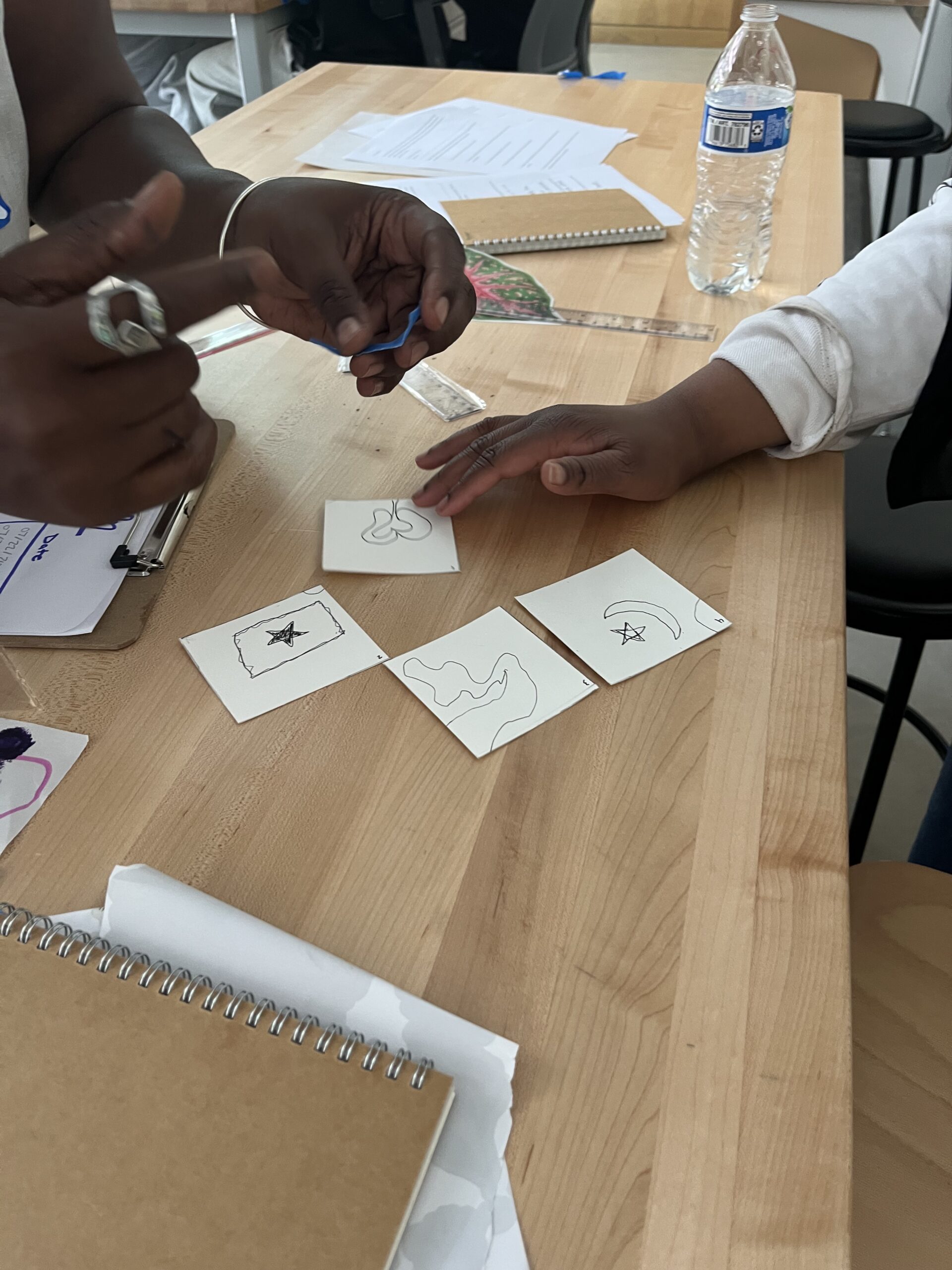
This image is of Summer Stories students working on their patterns during the pattern-making workshop.
Deycha guided us through paired mirror drawing, practicing straight lines, curves, and different ways of moving across the page. We then explored heritage and symbols: how an image can carry meaning and how we might use it to express something about where we come from.
Students developed repeating patterns, drawing on symbols and visual references to create their designs. Pattern making gave us a way to carry ideas about identity and heritage into visual art, experimenting with how shapes and images work together and what they communicate when repeated.
Reflecting on the week’s prompts, one student wrote:
All the prompts made me think more about my ancestors and how I view them.
Working with lines, symbols, and patterns gave students another way to tell their stories and consider what they wanted to carry forward from their ancestors.
Thursday: Poetry, Self-Portraits, and Future Worlds with Reagan
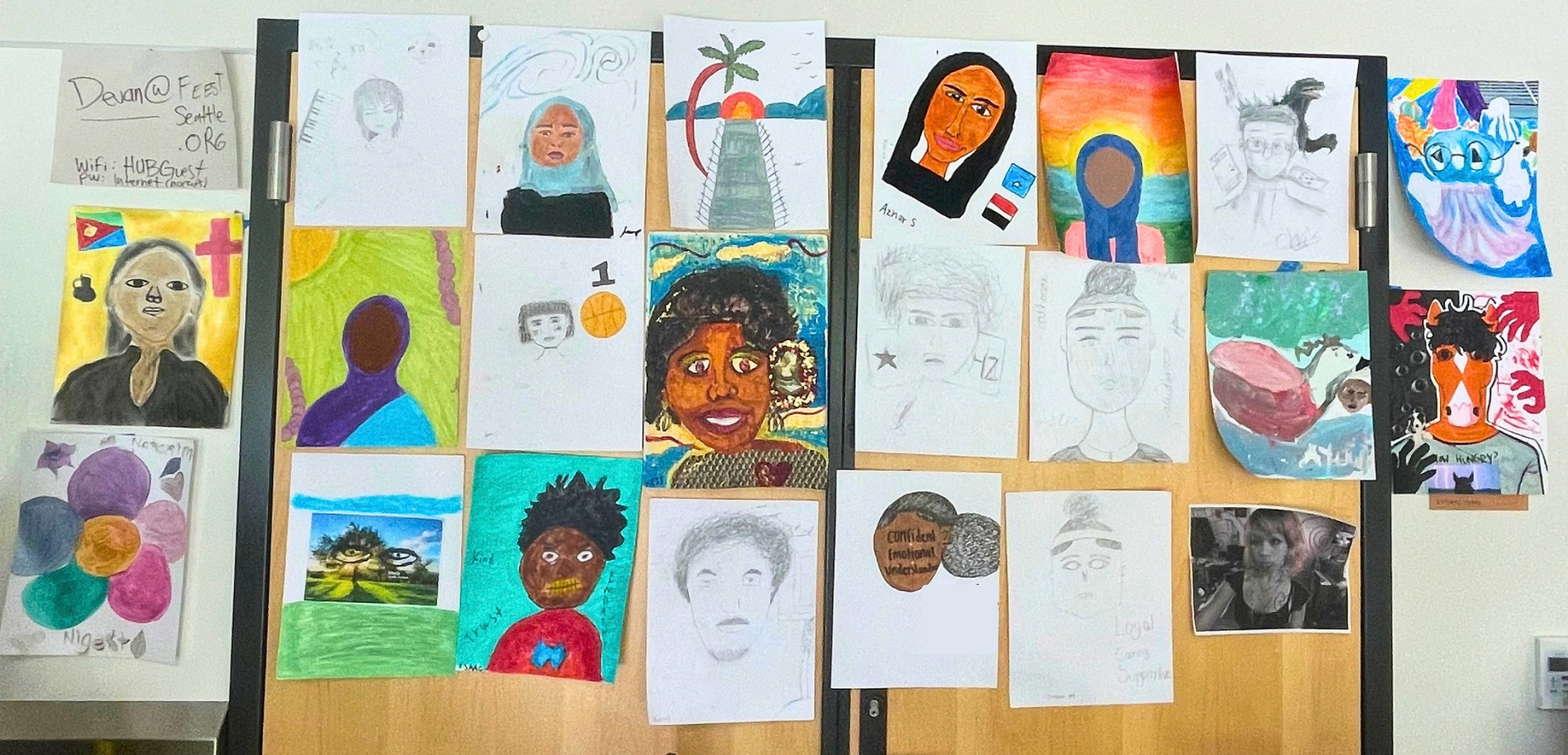
The image is of Summer Stories Students’ Self Portrait Gallery Wall
Reagan invited us to imagine ourselves in the future through poetry, self-portraits, and speculative fiction. For the portraits, students painted the best version of their future selves, reflecting on the question, “Who do you imagine this person to be?” Choices about color, shape, and expression became ways to show who we hoped to become.
Together, our self-portraits formed a gallery wall. Seeing them alongside each other gave us a chance to appreciate both individual expression and the community we were building.
Through the “Where I’m From” poetry prompt, students wrote about the places, people, foods, and traditions that shape them. One student wrote, “I am from rainy summers + rainy winters,” and later, “I’m from Seattle and Somalia.” These details made room for young people to define themselves in their own words and share the histories they bring into our community. That practice connects to youth power: knowing our experiences matter and using our voices to shape what comes next. One participant reflected:
I remember my love of poetry
We also explored speculative fiction and science fiction for social justice. Reagan’s writing prompt invited students to imagine themselves in a future world and tell a story about daily life, a celebration, or a problem to solve there. A few students shared their work aloud. One story, included in our zine, imagines food being free 100 years from now. Imagining a future with free food gave us a concrete way to think about the world we want to organize toward.
Friday: Ancestor Poems and Art-Making with Mei’lani
We closed the week with Mei’lani and the “My Ancestors Are” poetry activity. Students wrote a series of statements about their ancestors, reflecting on the qualities, knowledge, and relationships they carry with them. The workshop asked us to consider how our work today can bring us closer to our ancestors. One student described “A generational wealth in kindness, courage, knowledge, and joy.”
Students spent the rest of our creative time making art! We followed their interest in continuing to create, giving them room to develop work that would eventually live alongside each other’s writing and artwork. The finished zine carries those individual contributions into something we can share with our wider community.
Our theme also carried into how students thought about the future:
We need to leave something for our future generations like our ancestors did.
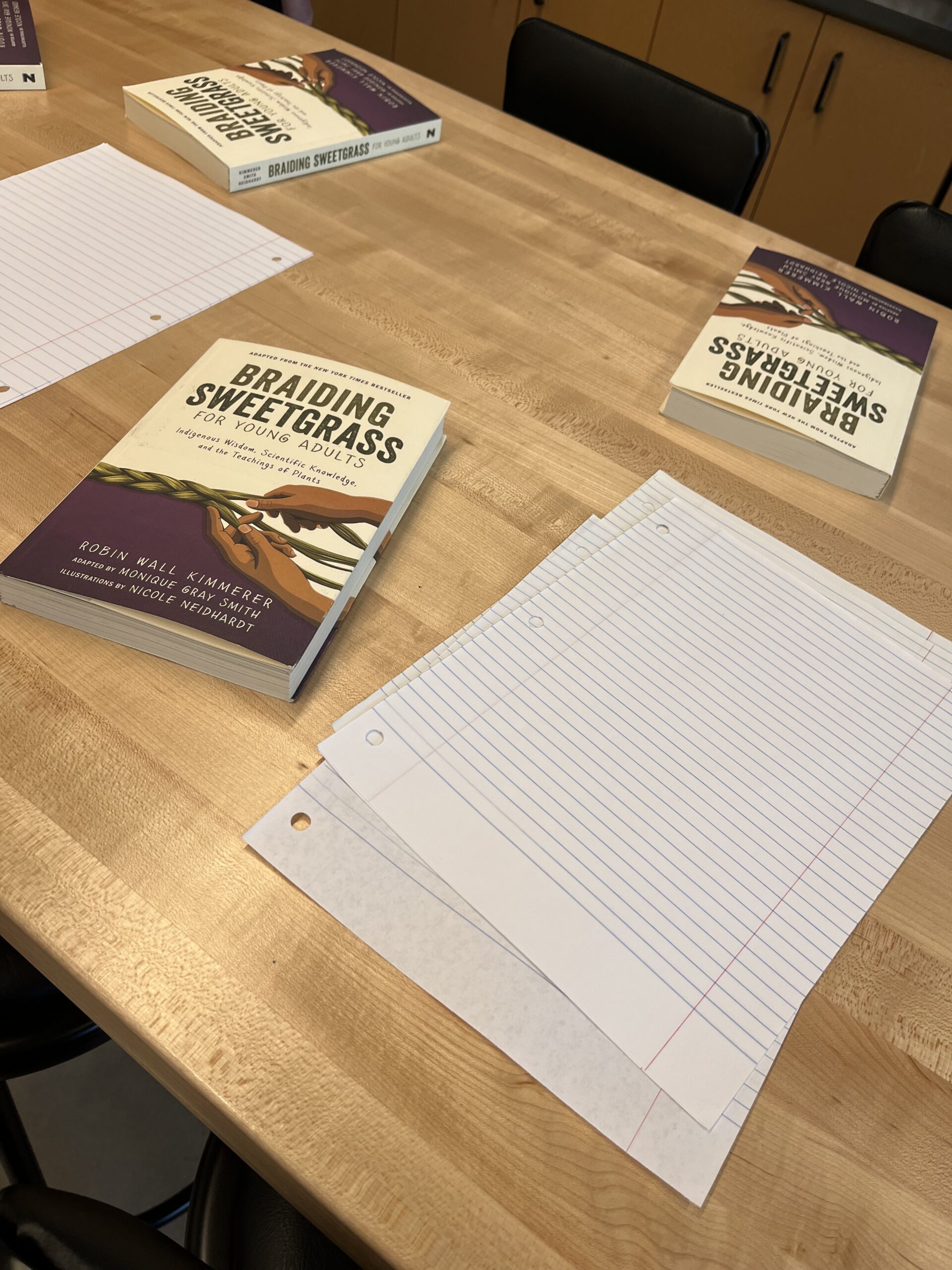
This image is of Braiding Sweetgrass next to some lined paper on the table. Students got the chance to read from it and reflect together on the passage.
It was a powerful reminder that when youth create together, they are also practicing the same skills that fuel organizing: collaboration, vision, and collective power.
Explore What We Created
Take a look at the art, connections, and moments that made Summer Stories special! Explore our collaborative zine featuring students’ artwork, writing, and reflections on Ancestors and Descendants.
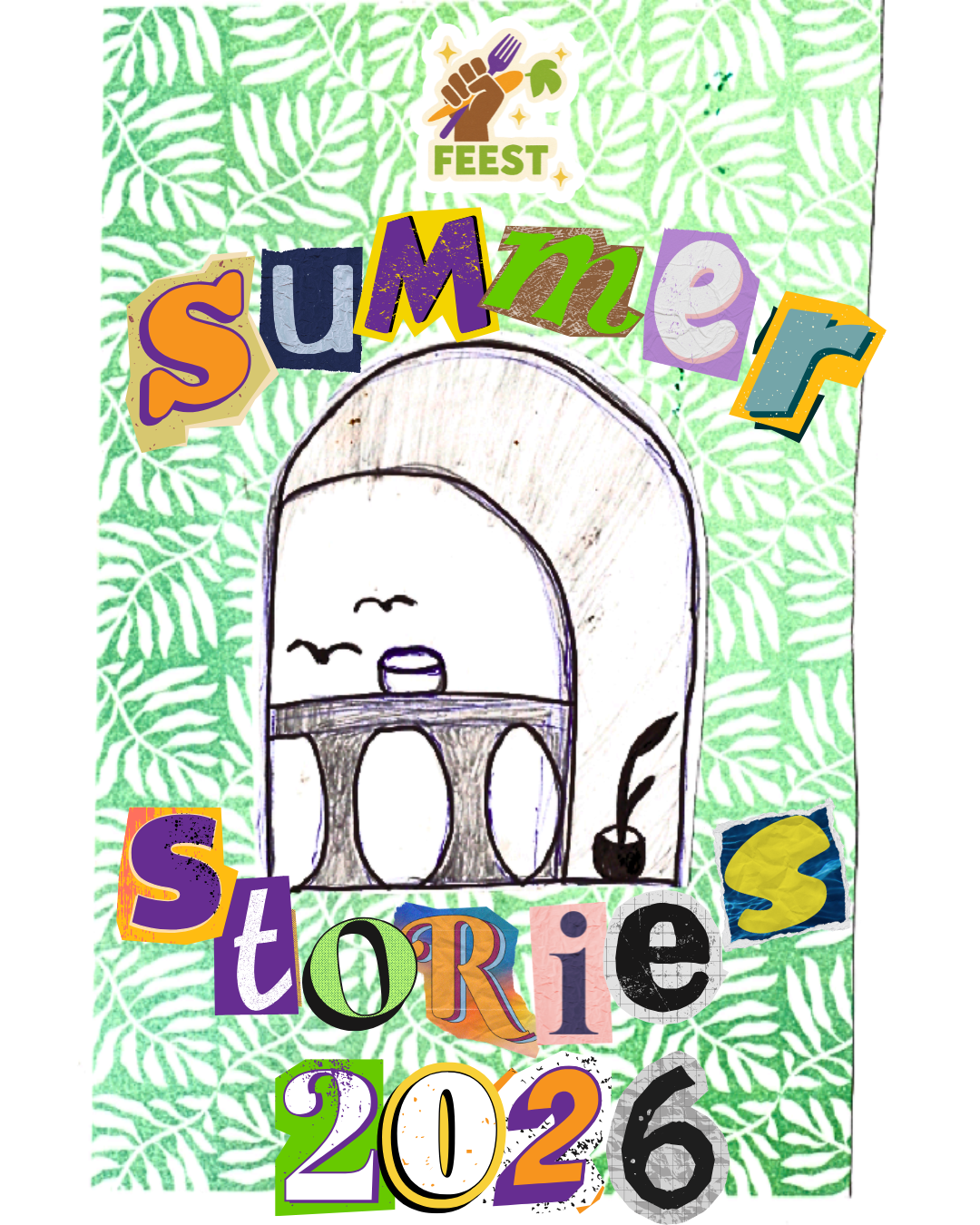
What We’re Carrying Forward
Across the week, students found new ways to express themselves and built connections with each other. Some discovered an artistic skill. Others returned to something they already loved. Many remembered the friends they made, the food we shared, and the experience of creating together. When we create together, we imagine a better world and build the connections that help us organize toward it.
Their feedback reminded us to keep making room for those relationships, alongside more time for independent creativity, conversation, and rest.
We’re deeply grateful to Nurhaliza, Annette, Deycha, Reagan, and Mei’lani for sharing their artistic practices and guiding our students through the week. Thank you to the White Center HUB for welcoming Summer Stories into the Makerspace.
And thank you to every young person who brought their stories, ideas, and curiosity into the room. The art we made and the connections we built came from what each of you shared. Summer Stories is part of how we build a movement rooted in youth voices, creativity, and connection. Creating together gives us space to imagine what we want for ourselves and our communities, deepen the relationships that sustain our organizing, and bring that vision into the work of changing our schools.
Show FEEST some love!
Youth are in the lead at FEEST because we know that change is not effective unless those most impacted by health inequities are the decision makers. Support youth leadership by donating today, OR sign up for our newsletter to get the latest from FEEST!